Solar Futures Study
Solar Futures Study
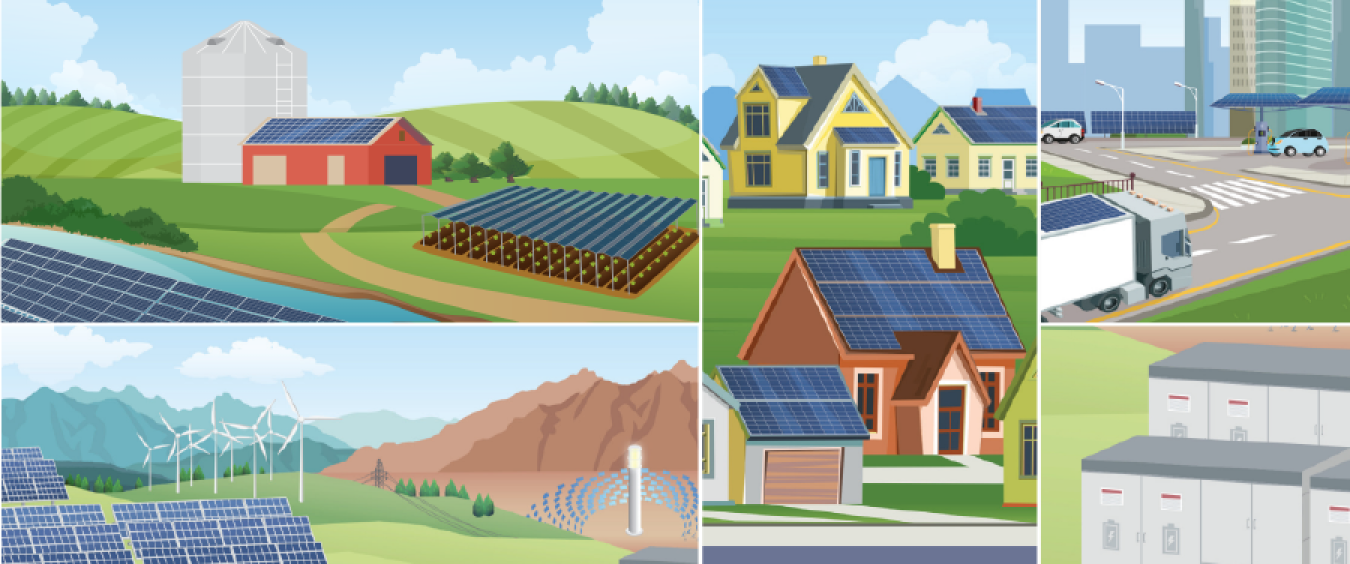
The Solar Futures Study explores solar energy’s role in transitioning to a carbon-free electric grid. Produced by the U.S. Department of Energy Solar Energy Technologies Office (SETO) and the National Renewable Energy Laboratory (NREL) and released on September 8, 2021, the study finds that with aggressive cost reductions, supportive policies, and large-scale electrification, solar could account for as much as 40% of the nation’s electricity supply by 2035 and 45% by 2050.
If you are searching for a trusted and Best Solar EPC Company in India then Paawan Energy is one of the best options for you. Our highly experienced team can install the project, which makes the EPC Solar installation service very smooth. People trust us due to our quality and hassle-free services. We aim to provide maintenance and high production efficiency by quickly resolving system downtime.
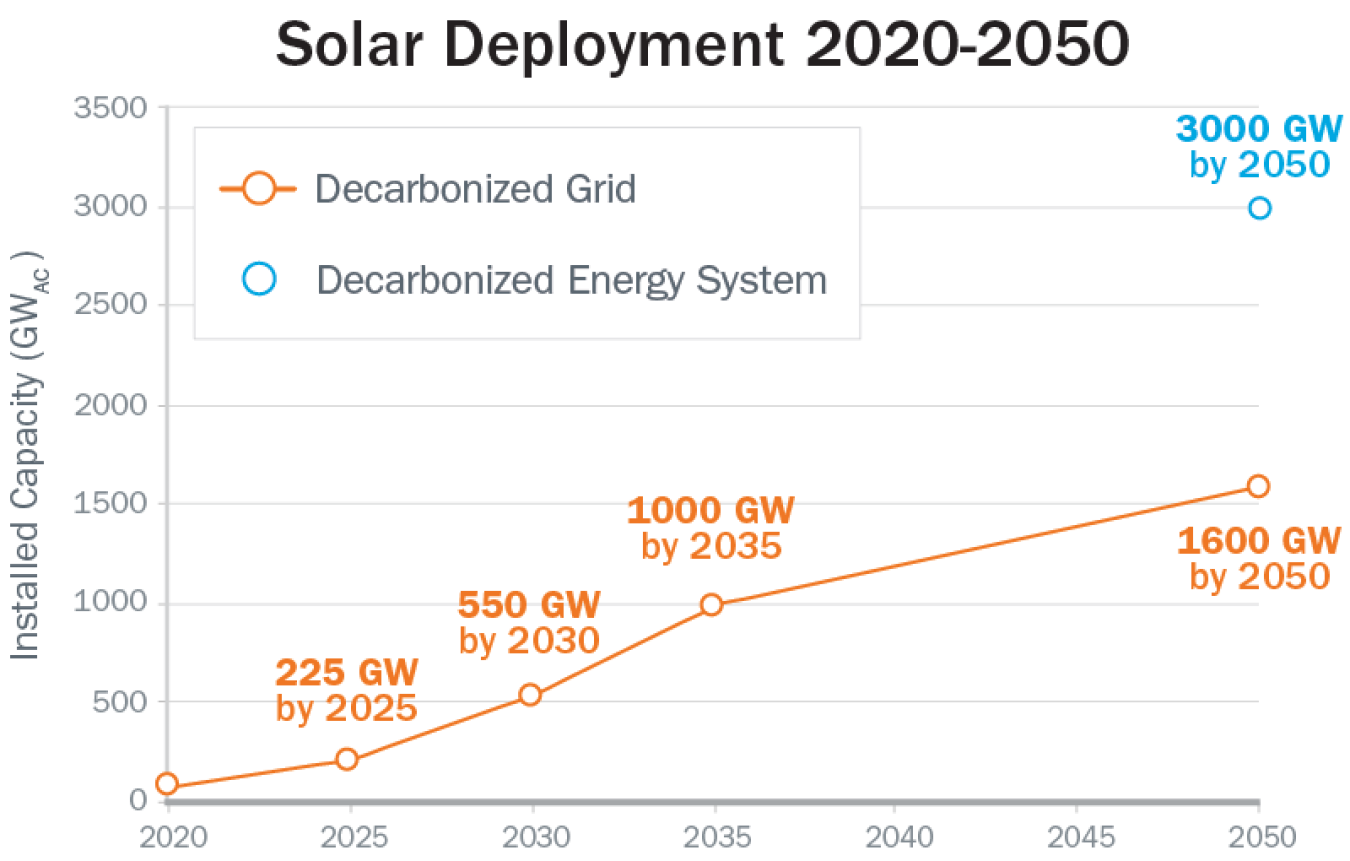
To reach these levels, solar deployment will need to grow by an average of 30 gigawatts alternating current (GWac) each year between now and 2025 and ramp up to 60 GW per year between 2025 and 2030—four times its current deployment rate—to total 1,000 GWac of solar deployed by 2035. By 2050, solar capacity would need to reach 1,600 GWac to achieve a zero-carbon grid with enhanced electrification of end uses (such as motor vehicles and building space and water heating). Preliminary modeling shows that decarbonizing the entire U.S. energy system could result in as much as 3,200 GWac of solar due to increased electrification of buildings, transportation, and industrial energy and production of clean fuels.
The Solar Futures Study is the third in a series of vision studies from SETO and NREL, preceded by the SunShot Vision Study (2012) and On the Path to SunShot (2016). While the previous studies focused on the impacts of low-cost solar technologies on the economy, this study dives into solar energy’s role in a decarbonized grid and provides analysis of future solar technologies, the solar workforce, and how solar energy might interact with other technologies like storage.
Key Findings of the Solar Futures Study
Explore the interactive diagrams for the study’s results and frequently asked questions below.
- With continued technological advances, electricity prices do not increase through 2035. Ninety-five percent decarbonization of the electric grid is achieved in 2035 without increasing electricity prices because decarbonization and electrification costs are fully offset by savings from technological improvements and enhanced demand flexibility.
- Achieving decarbonization requires significant acceleration of clean energy deployment, which will employ as many as 500,000–1.5 million people in solar jobs by 2035. Compared with the approximately 15 GW of solar capacity deployed in 2020, annual solar deployment is 30 GW on average in the early 2020s and grows to 60 GW on average from 2025 to 2030. Similarly substantial solar deployment rates continue in the 2030s and beyond. Deployment rates accelerate for wind and energy storage as well.
- Storage, transmission expansion, and flexibility in load and generation are key to maintaining grid reliability and resilience. Storage capacity expands rapidly, to more than 1,600 GW in 2050. Small-scale solar, especially coupled with storage, can enhance resilience by allowing buildings or microgrids to power critical loads during grid outages. In addition, advances in managing distributed energy resources, such as rooftop solar and electric vehicles, are needed to efficiently integrate these resources into the grid.
- Expanding clean electricity supply yields deeper decarbonization. Electricity demand grows by about 30% from 2020 to 2035, owing to electrification of fuel-based building demands (e.g., heating), vehicles, and industrial processes. Electricity demand increases by an additional 34% from 2035 to 2050. By 2050, all these electrified sectors are powered by zero-carbon electricity, and the electrification growth results in an emissions reduction equivalent to 155% of 2005 grid emissions.
- Impact of Decarbonization + Electrification Scenario from Solar Futures Study
Grid mixes and energy flows in 2020 and 2050 as envisioned in the Solar Futures Study. Newly electrified loads from the buildings, transportation, and industrial sectors mean that the electric grid will deliver more energy in 2050. This energy will come almost entirely from solar and other zero-carbon sources.
Addition Information:
- the web designing company is known as the best Web development company in India.
Do you know that Online Promotion House is known for supplying the best Online promotion services for your business?
SEO is very important for every type of businessman if you want to grow your business and looking for the best SEO services then an online promotion house is the best option for you
Comments
Post a Comment